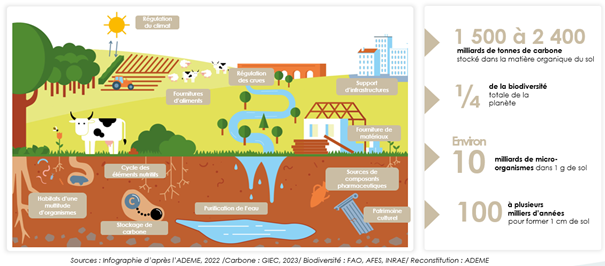
For several years now, soil health has emerged as a central issue in building agriculture that is more sustainable, resilient and high-performing. According to INRAE, healthy soil could store up to 4 tonnes of carbon per hectare per year, while playing a major role in water regulation, plant nutrition and microbial biodiversity (INRAE, 2020). Yet more than 60% of European soils are considered degraded (European Commission, 2022).
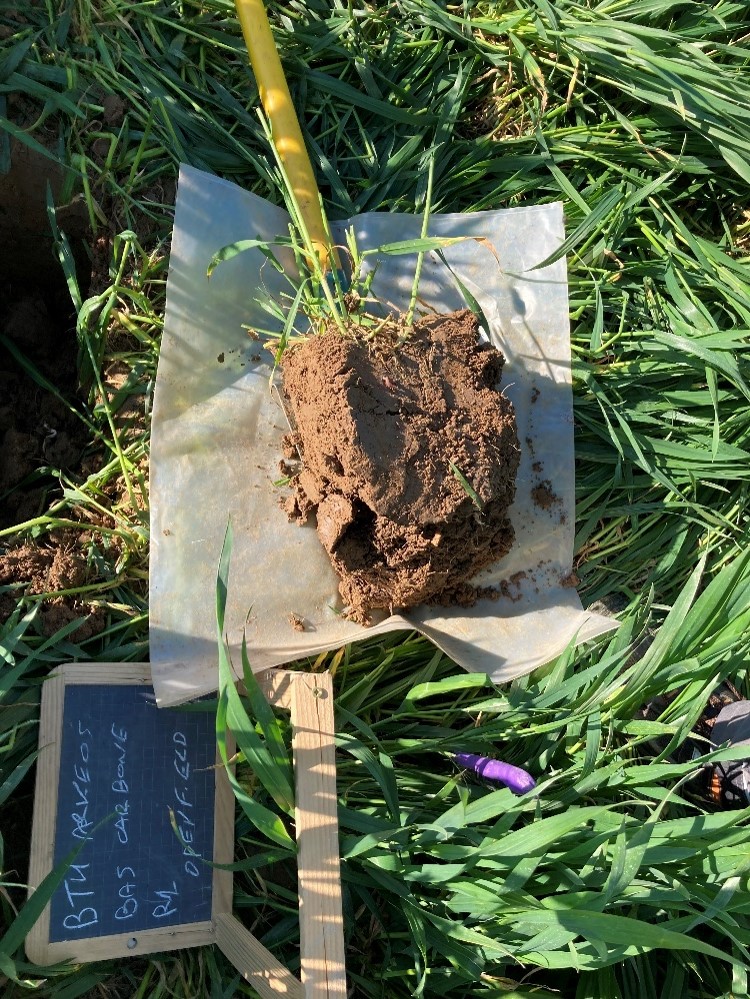
In response to this finding, Agrosolutions and its living lab Fermes Leader are continuing their commitment to sustainable agriculture, with the launch of a third soil sampling campaign on the Openfield multi-year experimental platform in Milly-la-Forêt. These samples are part of a 4-year multi-year approach conducted on the Openfield platform to identify, test and assess different solutions for measuring soil biology and determine the positive or negative impacts of the cropping systems implemented (low-carbon, conservation agriculture, low IFT and conventional).
Soil biology: a component to understand
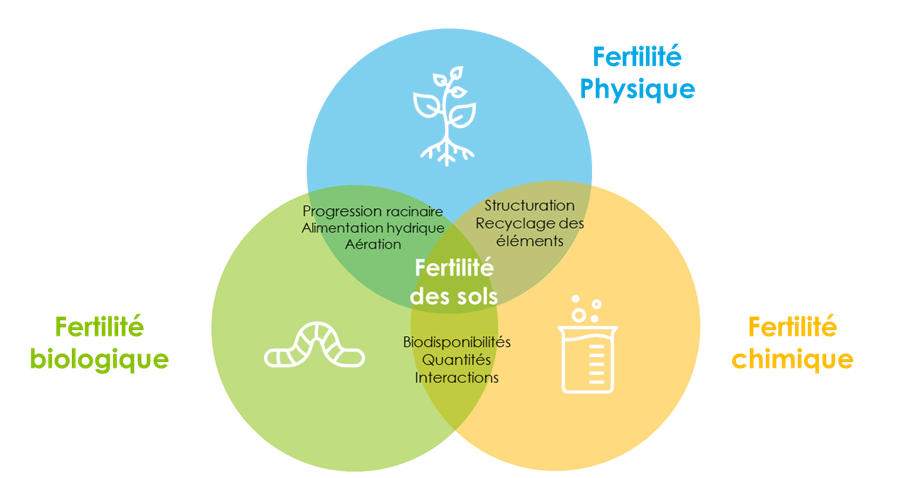
Soil health is now a major issue. Unlike well-established physical and chemical analyses, which they complement, biological soil analyses are still in the development stage.
Choosing the right biological indicators is essential to understand the soil and adapt farming practices accordingly to ensure the preservation of soil resources, but it is also crucial to consider the acceptability of these analyses in the field, a key factor in their adoption by farmers and technicians.
The interest in soil biology is not incidental. It responds to demand from field stakeholders, in particular the Fermes Leader cooperative network, which sees this dimension as a lever to better steer the agroecological transition, notably through the implementation of practices such as regenerative agriculture.
Two years of experiments already on Openfield
After two initial campaigns marked by contrasting weather conditions, the 2025 sampling period is fast approaching. To ensure the results are truly comparable, sampling will be carried out at the same time as in previous years, i.e. late May to early June.
The tests will once again cover a broad spectrum of innovative solutions available on the market: soil analysis laboratories, innovative or disruptive technologies (portable labs, sensors, etc.).
The objective: validate the performance of these innovative solutions, their stability over time, and their ability to generate data that farmers can use. This will also enable companies to receive user feedback to improve their services and tools, and identify relevant indicators for regular monitoring of a farm’s soils.
Mid-project user feedback on solutions for measuring soil biology
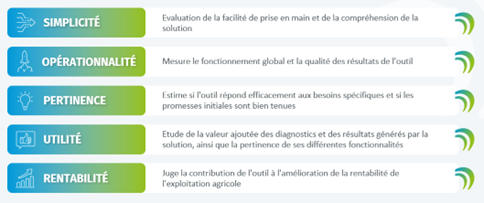
For a comprehensive assessment of user feedback, Fermes Leader uses the U-nID tool, based on five dimensions (simplicity, operationality, relevance, usefulness and profitability), to assess and compare solutions for measuring soil biology both overall and by each dimension.
The results come both from feedback collected on the experimental platform and from feedback from cooperatives in the Fermes Leader network. The synthesis of these assessments has highlighted several key points.
- Simplicity: Soil sampling carried out with an auger and that can be done by the user (farmer or technician) is the simplest method. Some solutions offer to carry out analyses directly in the field (portable tools). It is also important to take into account the data entry part, which is easier on an online platform.
- Operationality: The time required to retrieve data remains highly variable from one solution to another. This indeed depends on the level of detail and complexity expected in the results delivered.
- Relevance: Some laboratories are beginning to have fairly robust and specific reference frameworks for different crops, but this is not the case for all solutions. There are still biases depending on location and the pedo-climatic context.
- Usefulness: A soil analysis is useful for the farmer if it can be linked to advice and a strategy for their technical itineraries. This is not straightforward today, as interpreting the results often requires substantial support from laboratories/companies to explain the indicators and their agronomic meaning.
- Profitability: Profitability remains the main barrier for all analysis solutions. This represents a high cost for users.
Towards measurement solutions adapted to field realities
With Openfield’s multi-year experimental set-up and the evaluation of user feedback from the cooperative network, Fermes Leader is able to select and co-develop diagnostic solutions that better meet the needs of stakeholders—farmers and technicians—engaged in preserving soil health. Despite clear progress, barriers still need to be overcome for soil biology analysis solutions to be fully deployed and adopted, thereby enabling the transition towards more sustainable management of agricultural soils.
Fermes Leader, as Agrosolutions’ Living Lab, plays a key role here: that of a facilitator between innovation and the field.
To go further: Discover Agrosolutions’ position paper on soil health