

An agtech pilot project is a trial conducted under real-world conditions, on one or more farms, to verify that an innovation delivers on its promises: that it works, that it is easy to use, and that it is profitable for the farmer. It differs from a demonstration, which showcases a solution, and from a proof of concept, which mainly validates technical feasibility: a field trial produces measured results, with the users who will (or will not) adopt the solution.
For a start-up, this is often the mandatory step between a promising product and its first customers. An innovation that performs well in the lab is not enough: farmers, advisors, and cooperatives expect evidence obtained in the field.
Since 2017, Fermes Leader has been supporting agtech start-ups and scale-ups in this process, with a network of agricultural cooperatives present across the major production basins. Here are five steps to make yours a success.
Table of contents
Step 1: Define the protocol before entering the farm
A well-defined test starts with a precise question: what are you going to prove, to whom, and with which indicators? Without this, the trial produces observations that are difficult to use, and rarely provides commercial proof.
Before selecting a farm, clarify three points:
- The objective of the test: agronomic efficiency, technical reliability, ease of use, profitability, or a combination of these criteria.
- The use case: irrigation, robotics, sensors and IoT, remote sensing, innovative nutrition, decision support tools (DSTs)… each use case calls for a different protocol.
- The protocol: trial terms, a schedule aligned with the farming season, monitoring indicators, and methods for reporting results.
A field validation trial generally follows a simple logic: defining the protocol, setting up the trial, field monitoring, analyzing results, and reporting. The schedule depends on the farming season: missing a testing window can delay the pilot by several months.
Step 2: Budget the agtech pilot project in the field
The budget for a real-world trial is often higher than start-ups anticipate. It should be factored into the commercial development costs in the business plan, not treated as a side expense.
Expenses add up quickly:
- Time and travel related to field observations, sometimes repeated throughout the season.
- Laboratory analyses, depending on the indicators to be measured.
- Farming operations required for the trial (sowing, treatments, harvest, etc.).
- Compensation for the farmer to cover any potential production losses, or even crop destruction if the trial requires it.
This last item is often overlooked or underestimated. Planning for it from the outset avoids having to interrupt a pilot mid-season, which would mean losing both the investment already made and credibility with partners.
Step 3: Be transparent about your solution's level of maturity
Transparency about the level of maturity is one of the best levers of credibility with field partners. The field quickly exposes any gap between the message and reality: an overstated promise most often backfires on the company.
A more effective approach is to:
- Clearly state what has already been demonstrated and what still needs to be validated.
- Present the pilot project as a co-construction process rather than as a simple demonstration.
- Involve farmers, advisors, and cooperatives from the design stage. Their field experience provides feedback and insights that a development team cannot obtain on its own.
This humility does not weaken a start-up. It builds a relationship of trust, which will prove valuable when moving from pilot to commercialization.
A Concrete Example: Surus Connect
This young company is developing a connected device and an accident prevention application for isolated workers in agriculture. Rather than presenting a “ready-made” solution, it chose to collaborate closely with its initial farmer-testers over two testing seasons, supported by Fermes LEADER. It clearly stated what remained to be validated: the reliability of the detection algorithm, the final device prototype, and the application’s functionalities.
Field feedback directly informed the product. Farmers reported unwanted alerts, which were corrected during the season, as well as a device that was still too bulky, battery life to monitor, and areas without network coverage in silos. They also requested connectivity testing before any installation. These insights allowed the startup to adapt its solution to the real constraints of users. The benefit extends beyond the product: by feeling involved in its design, these initial testers became its best ambassadors.
Step 4: Understand the barriers to adoption of an agtech innovation
Technology is only part of the equation: an innovation is adopted if it fits into existing practices and if it is profitable for the user. Start-ups often focus their attention on technical performance, whereas adoption also plays out on two other fronts.
| Type of barrier | Points to observe during the trial |
|---|---|
| Operational | Learning to use the tool, maintenance, user training, integration into the farm’s existing operations |
| Economic | Cost of adoption (adjustments, system changes, additional time), expected economic return, value perceived by the user |
Step 5: Evaluate the pilot and prepare for commercial adoption
A field trial must conclude with a 360° evaluation: technical, operational, and economic. Each of these dimensions answers a question that the buyer or advisor will ask: does it work, is it usable, is it worth the price?
| Dimension | Question from the buyer or advisor |
|---|---|
| Technical | Does it work? |
| Operational | Is it usable on my farm? |
| Economic | Is it worth the price? |
A thorough evaluation allows the start-up to:
- objectively demonstrate its strengths, with results obtained under real-world conditions,
- identify areas for improvement before deployment,
- have a credible deliverable to present to cooperatives, distributors, and customers.
From pilot to commercial adoption
Without evaluation, a pilot remains an isolated experience. With it, it becomes commercial proof: the results serve as a basis for discussion with cooperatives and distributors, and accelerate entry into the French agricultural market. So from the outset, think about the format of the final deliverable (oral presentation, quantified summary, farmer feedback).
Why test your agtech innovation with Fermes Leader?
Fermes Leader offers a 360° evaluation of field innovations, combining three dimensions:
- A network of 30 cooperatives present across the major production basins, from large cooperative groups to small local cooperatives, mainly in field crops and viticulture.
- Openfield, a field testing platform designed to produce evidence under real-world conditions and gain visibility among stakeholders in the French agricultural market. [Link to the Openfield page.]
- A multidisciplinary team (agronomy, soil health, decision support tools, robotics, cooperative relations) that helps start-ups understand their strengths and areas for improvement to succeed in field adoption.
Fermes Leader also draws on the InVivo group ecosystem and the expertise of Agrosolutions, an agriculture and environment consulting firm.
Our agtech projects
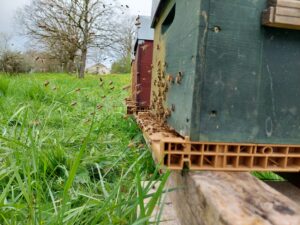
CoCoBees : Un projet collaboratif pour des pratiques agricoles respectueuses des abeilles et de la biodiversité

TerraWatt : Test de biosolution à base de biochar et de digestat solide
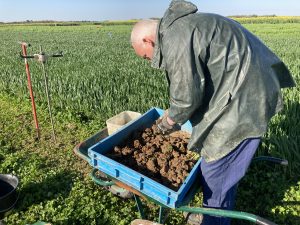
SARA : Soil AgTech for Regenerative Agriculture, comparer les outils de diagnostic pour piloter la santé des sols
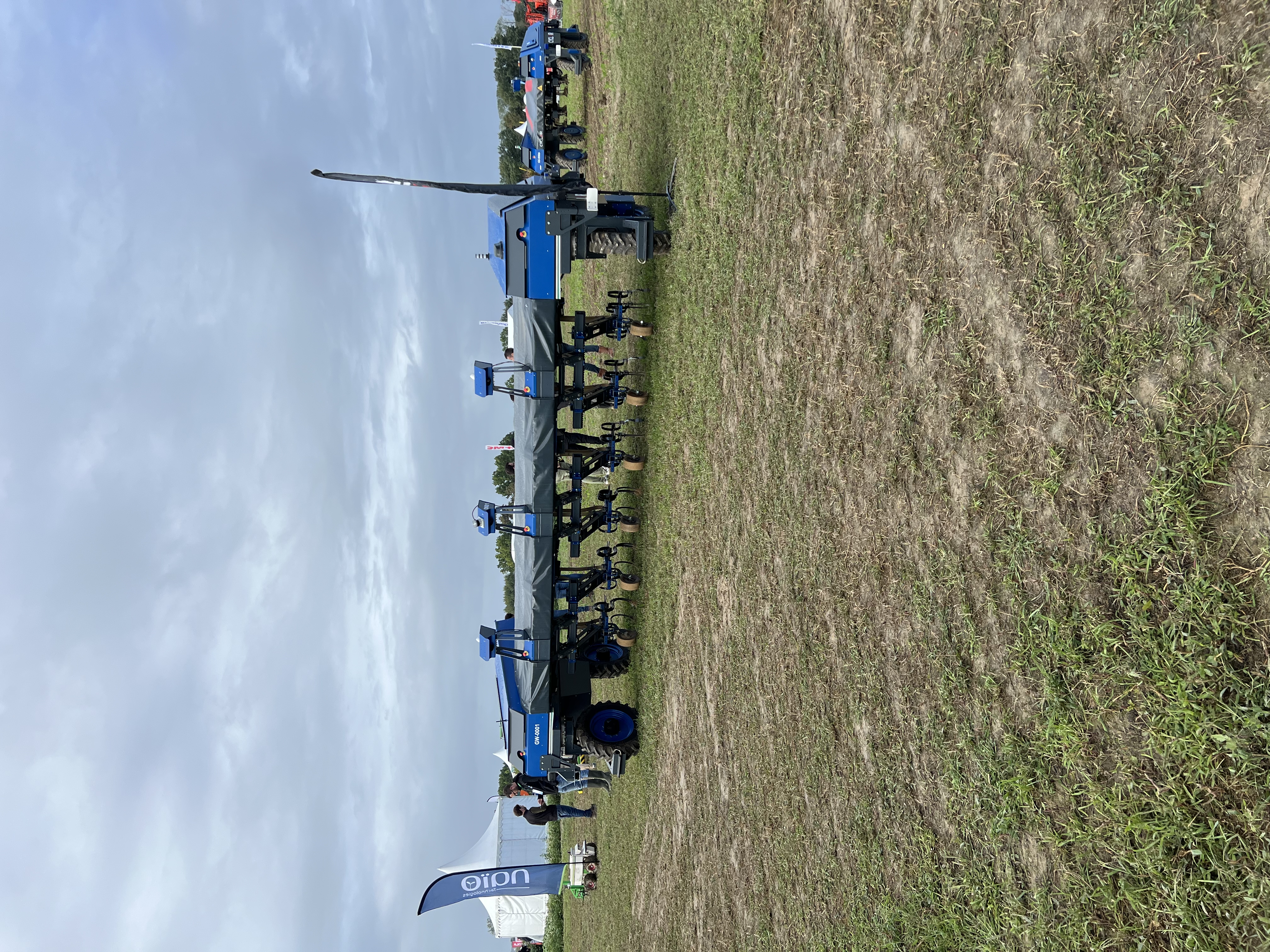
Evaluation du robot de désherbage mécanique de Cyclair
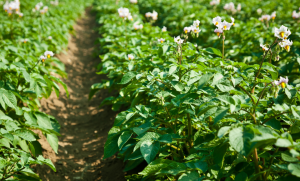
Pilotage de la culture de pommes de terre – ABELIO

Fabacéé : favoriser les changements de pratiques et les économies d’énergie
Frequently asked questions about agtech pilot projects
How long does an agtech pilot project last?
The duration depends on the growing season and the crop in question. A field validation trial follows five stages (scoping, implementation, monitoring, analysis, reporting), and a missed testing window can delay the pilot by several months.
Who pays for the costs of an on-farm pilot?
The budget must be planned from the outset in the start-up’s business development plan: travel, laboratory analyses, agricultural operations, and farmer compensation.
What is the difference between a demonstration and a field validation trial?
A demonstration aims to generate visibility among prospects. A field validation trial measures results under real-world conditions, with a protocol, indicators, and a report, in order to produce commercially usable proof.
Does the solution need to be finalized to launch a pilot?
No. It is best to clearly state what has already been demonstrated and what still needs to be validated, and to present the pilot as a co-construction effort with farmers, advisors, and cooperatives.
How do you turn a pilot into commercial adoption?
Through a 360° evaluation (technical, operational, economic) that results in a credible deliverable to present to cooperatives, distributors, and customers.

