The Cocobees project aims to foster exchanges between farmers and beekeepers to better consider pollinator health in agricultural practices deployed in field crops. The main objective is to preserve wild and domestic bees, their diversity and abundance, while promoting sustainable agricultural practices.
One of the solutions explored is the establishment of flower strips near crops and apiaries. These floral areas provide both a refuge and a valuable food source for insects. The project’s mission is to scientifically evaluate their effectiveness to guide farmers in their adoption.
Learn more about the project and its partners
The Importance of Pollinators for Agriculture and Biodiversity
Pollinators play a role in plant reproduction and food production. More than 75% of food crops depend at least partially on their activity. Their silent work improves yields, crop quality, and plant genetic diversity.
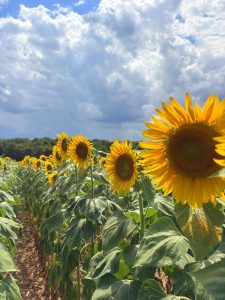
However, their populations are declining due to habitat loss, lack of floral resources, certain phytosanitary products, and climate change. After the flowering of rapeseed or sunflower, a critical period of food scarcity sets in, further weakening these insects.
Flower strips address this need by providing nectar and pollen during these pivotal periods.
Flower Strip: Definition and Role in Pollinator Preservation
A flower strip is an area sown at the edge or within an agricultural plot with a mixture of melliferous and nectar-rich plants. Its composition is designed to offer continuous flowering from spring to autumn, ensuring pollinators have an accessible pantry throughout the season.
In addition to feeding insects, these arrangements create ecological corridors, improve soil structure, limit erosion, and contribute to the beautification of the agricultural landscape.
Objectives of Flower Strip Trials in the Cocobees Project
Four apiaries installed at partner farms are monitored throughout the season. Near each, a flower strip has been planted to evaluate its effectiveness. Two objectives guide these trials:
- Do the sowings reach flowering?
- Do the strips attract targeted pollinators (bees, hoverflies, butterflies)?
Semences de France and Cocobees: A Partnership for Effective Flower Strips
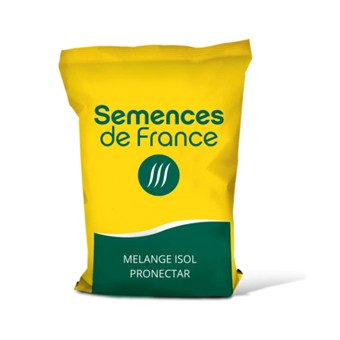
To ensure the quality of the sowings and the desired floral diversity, CoCoBees relies on a partnership with Semences de France. The partners were therefore able to use the I-SOL® PRONECTAR mixture (30% sainfoin, 20% buckwheat, 10% sweet clover, 10% red clover, 10% Persian clover, 10% crimson clover, 5% phacelia, 5% borage). The mixture was chosen to ensure good soil coverage, meet the needs of pollinators, and reduce their mortality.
Scientific Monitoring: How to Measure the Effectiveness of Flower Strips
To monitor the evolution of the flower strips, partners regularly visit the field to observe what is happening, both with the plants and the insects. Several times per season, surveys are conducted to note which plant species are in bloom, how many flowers are present, and how this evolves over the weeks.
These observations are cross-referenced with monitoring of pollinator insect visitation. The objective is to identify which species visit the flowers: domestic bees, of course, but also bumblebees, butterflies, hoverflies, and other beneficial insects. To do this, observers slowly walk through the flower strip, noting the insects encountered visually, on a well-defined transect. This allows for estimating the actual attractiveness of the strip at different times of the season.
Establishing a Flower Strip: Steps and Best Practices
Setting up a flower strip requires a minimum of preparation. The location must be chosen carefully, ideally in less productive areas or at the edge of a crop. The soil is superficially worked and then sown in spring or autumn depending on the chosen mixture.
Maintenance involves controlling weeds and avoiding any cutting during flowering, to preserve visitors. By respecting these principles, the flower strip becomes a true pantry for pollinators.
Perspectives and Next Steps for the Cocobees Project
Observations continue throughout the season. The first results will be shared at the end of the year with farmers and partners, to refine floral mixtures and formulate concrete recommendations for the large-scale adoption of flower strips.